Special Web Offer - Get 50% OFF!
Grab Your Deal Now
PlantSnap
Plant Care
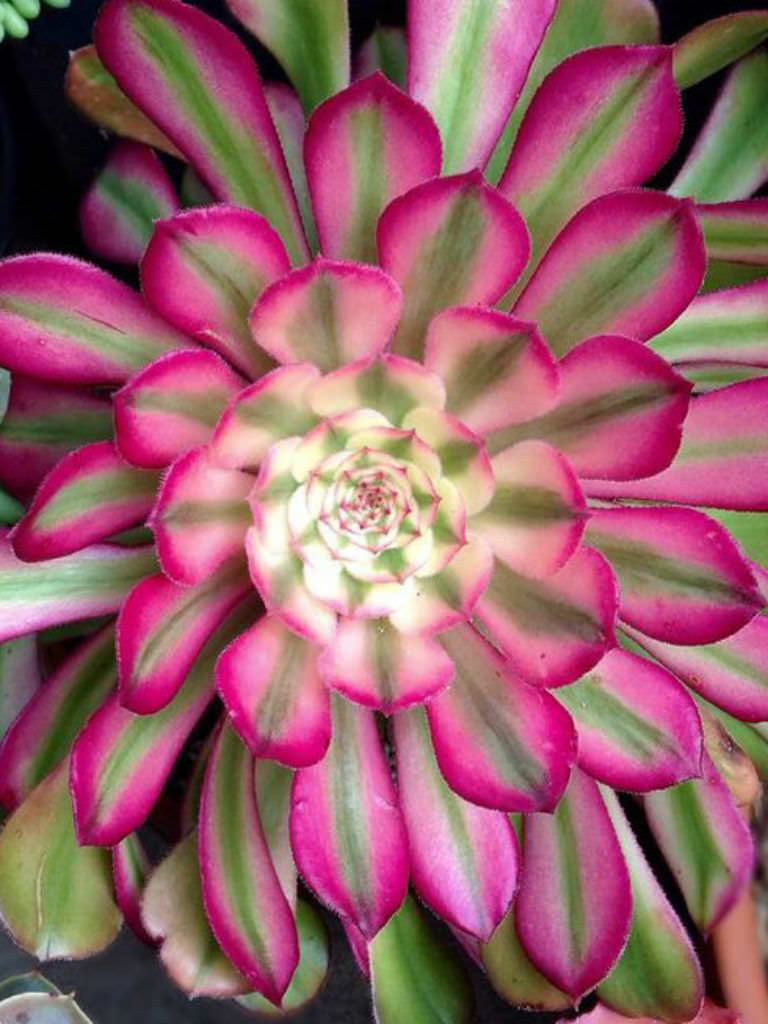
Mardi gras aeonium
(Aeonium Mardi gras)
Also Known As
Mardi gras aeonium, Rainbow aeonium
About This Plant
Aeonium 'Mardi gras' is a succulent plant species with rosettes of variegated leaves that change color depending on the amount of sunlight it receives. The leaves are green in the center with a white or yellowish margin, and can turn pink or red in full sun. The plant produces tall spikes of yellow flowers in the summer.
Plant Care Instructions
Outdoor Size Range
12-24 inches (30-60 cm)
Light Requirements
Aeonium 'Mardi gras' prefers bright, indirect light. It can tolerate some direct sun, but too much can cause the leaves to burn.
Humidity Needs
Aeonium 'Mardi gras' prefers low humidity levels and can tolerate dry air.
Fertilizing Schedule
Fertilize the plant once a month during the growing season with a balanced, water-soluble fertilizer.
Pruning Guidelines
Prune the plant to control its size and shape. Remove any dead or damaged leaves or stems as needed.
Common Pests and Diseases
Common pests for Aeonium 'Mardi gras' include mealybugs, spider mites, and scale insects. Diseases are not common, but overwatering can lead to root rot.
Indoor Size Range
6-12 inches (15-30 cm)
Watering Schedule
Water the plant deeply but infrequently, allowing the soil to dry out slightly between waterings. In the winter, reduce watering to once every two weeks.
Temperature Range
The plant prefers temperatures between 60-75°F (15-24°C). It can tolerate higher temperatures but may require more frequent watering.
Growing Season
The plant grows actively in the spring and summer and may go dormant in the winter.
Growing Difficulty Level
Aeonium 'Mardi gras' is relatively easy to grow and care for, making it a good choice for beginners.
USDA Hardiness Zones
Aeonium 'Mardi gras' is hardy in USDA zones 9-11.
Did You Know?
Aeonium 'Mardi gras' is a hybrid plant that was created by crossing two other Aeonium species, A. arboreum and A. undulatum.
